Trust the Person. Build the System.
Two kinds of trust
A club needs both. Most small clubs only have the first.
"You trust the person. You also need institutional trust."
Trusting the person is personal. Trusting the system is institutional. When the person leaves, the system's trust stays with the club. It's the difference between answering a member with "Pat says it's fine" and answering with "We checked, and here's how we know." Putting controls in place isn't a vote of no confidence in anyone. It's how you stop asking one volunteer to carry the club's credibility on their own.
What controls actually protect
People hear "financial controls" and think fraud. In a small club, fraud is rare. Controls earn their keep in three other places:
The $240 question

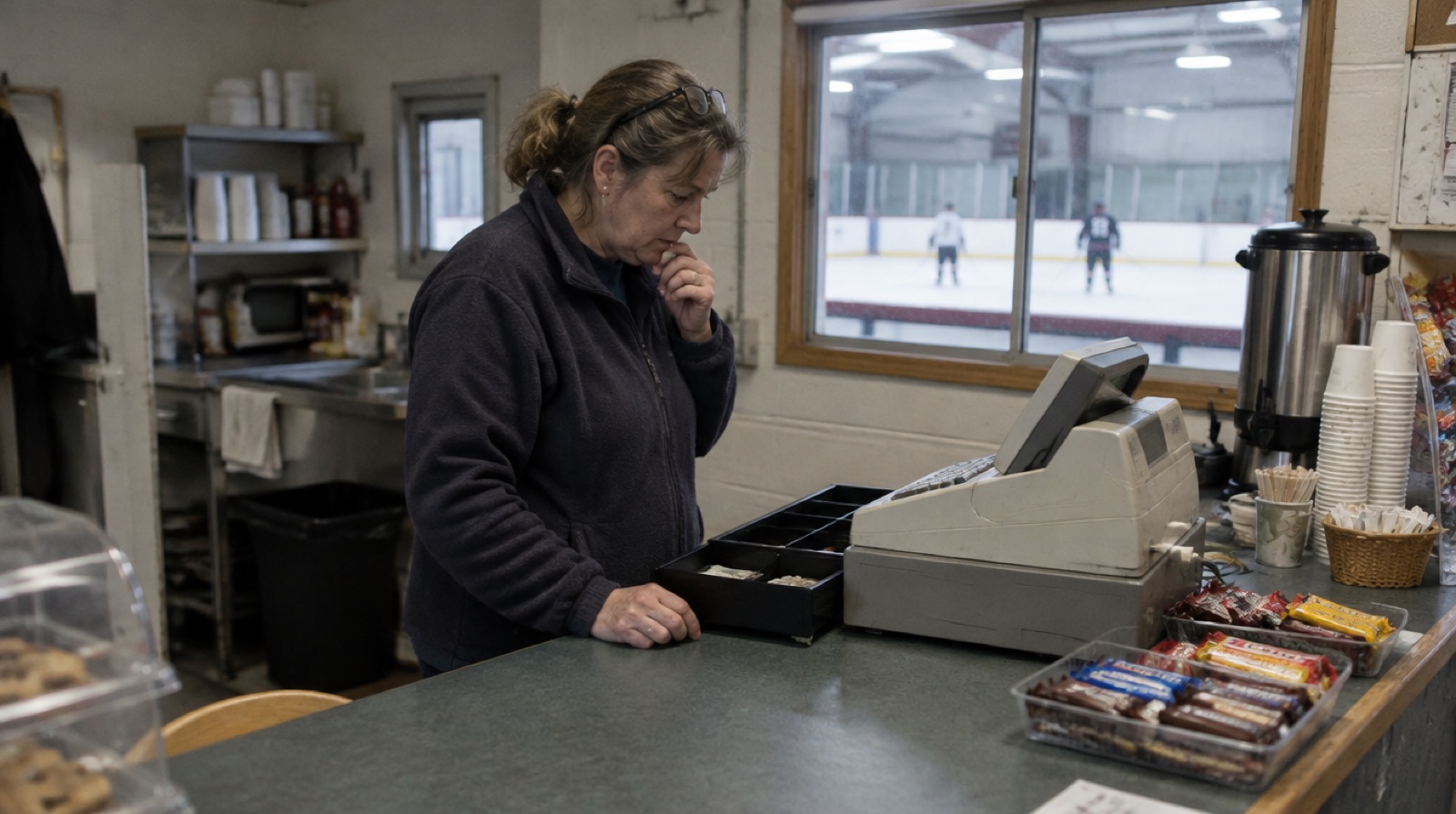
You're a director of a minor hockey club. At the November board meeting, the treasurer mentions that October's canteen deposits are $240 lower than the register tapes say they should be. Several volunteers share the canteen drawer. Nobody counts at the end of a shift; whoever closes takes the cash to the safe, and the treasurer makes the deposit when they can.
What's the first thing you'd say?
- Nobody knows which night the gap happened.
- Nobody knows whether it was the drawer, the safe or the deposit.
- Every volunteer who worked that month is quietly under a cloud.
- The board writes it off, and it comes back up at the AGM.
- Each shift's cash has a signed count sheet.
- Each deposit slip matches a count sheet, except one.
- The count for October 18 says $1,020; the deposit says $780.
- The missing envelope is found in the safe. Ten-minute conversation, no names.
What "material" means for a small club
People with a business background sometimes wave off small differences: "that's not material." They're using the word correctly for a business, and incorrectly for your club. Material means big enough to change a decision or damage trust, measured against your club's size. A $500 discrepancy means nothing to a grocery chain. On a $10,000 budget, it's 5% of the year.
Some things matter at any size. An undisclosed $200 payment to a board member's relative is small money, but it can take over an AGM. When reputation is involved, the dollar amount isn't the test. The question is how it would look if a member asked about it.
Controls should match the risk
This course won't ask a volunteer board to do everything a large organization would. They won't do it, and a rule nobody follows is worse than no rule. It gives everyone the feeling that someone's checking when nobody is.
This course gives you six rules, each with up to three levels: minimum, better and best. Every club should be at the minimum. You move up where your risk is highest. A club with a busy canteen needs more on cash; a club that runs everything through e-transfer needs very little.
Now think about your own club.
No right answers here. Your notes stay in this browser so you can come back to them in lesson 5.
Cash is where most small-club problems start, because it's the only money that doesn't leave a trail on its own. Lesson 2 covers the two rules that give it one: count with two people, and deposit all of it.